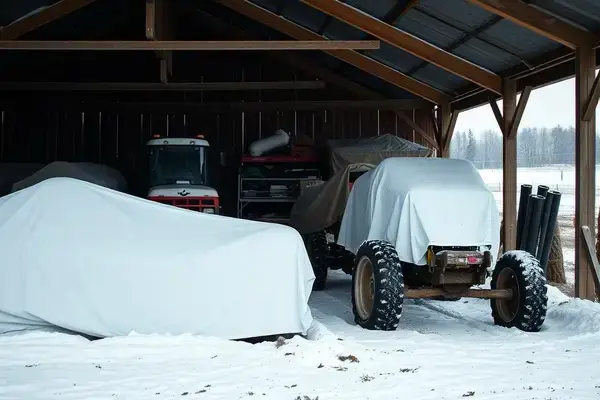
As harvest winds down and temperatures drop, it's time to think about storing your equipment properly for winter. Proper winterization protects your investment and ensures your equipment is ready to go when spring arrives. Here's our complete guide to winterizing your farm equipment.
Start With a Clean Machine
Before storing your equipment, give it a thorough cleaning. Remove all crop residue, mud, and debris from the exterior and undercarriage. Pay special attention to areas around the engine, radiator, and cooling fins. Crop material can trap moisture and cause corrosion over winter. A clean machine also makes it easier to spot any leaks or damage that needs attention before storage.
Change All Fluids
Fluids should be changed at the end of the season for several reasons. Old oil contains contaminants that can cause internal corrosion. Here's what to address:
- Engine oil: Change the oil and filter to remove contaminants.
- Hydraulic fluid: Consider testing hydraulic fluid for moisture content.
- Coolant: Check antifreeze protection and top up if needed.
- Fuel: Add fuel stabilizer to prevent fuel breakdown and varnish.
- Gear cases: Check and top off transmission, differential, and final drive oils.
Fuel System Protection
Diesel fuel is particularly prone to issues during cold weather storage. Water can condense in fuel tanks and cause problems. Use a quality fuel stabilizer and run the engine for a few minutes to circulate treated fuel through the entire system. For equipment stored in unheated buildings, consider using a winter diesel blend to prevent gelling.
Battery Care
Cold weather is hard on batteries. If you're not using equipment regularly, remove batteries and store them in a warm, dry location. Keep batteries charged on a trickle charger throughout winter. A dead battery can freeze and crack in extreme cold, causing permanent damage.
Tire Protection
Tires can develop flat spots when equipment sits in one position for months. If possible, move equipment periodically during winter. For long-term storage, consider blocking tires to take weight off them. Check tire pressure before storage and inflate to proper levels — cold weather will cause pressure to drop.
Protect Exterior and Moving Parts
- Lubricate all grease points to push out moisture and prevent corrosion.
- Apply rust preventative to exposed metal surfaces.
- Cover any bare metal on implements with appropriate coatings.
- Store belts in a cool, dry place to prevent cracking.
Seal openings
Rodents can cause significant damage to stored equipment. Seal any openings where mice could enter — exhaust pipes, air intakes, and cab vents. Place moth balls or rodent repellents near equipment. Remove any grass or crop residue from around stored equipment that might provide nesting material.
Create a Storage Log
Keep detailed records of what maintenance was performed before storage. Note any repairs that were deferred and should be addressed in spring. This makes spring startup much easier and ensures nothing gets forgotten.
Professional Winterization
If you're not comfortable performing all these tasks yourself, let us help. Our winterization service includes all these steps and more. We'll get your equipment properly stored so it's ready to go when you need it next spring.
Taking the time to properly winterize your equipment pays off in the long run. It extends equipment life, reduces spring startup problems, and saves money on repairs. Contact us if you need help preparing your equipment for winter storage.